
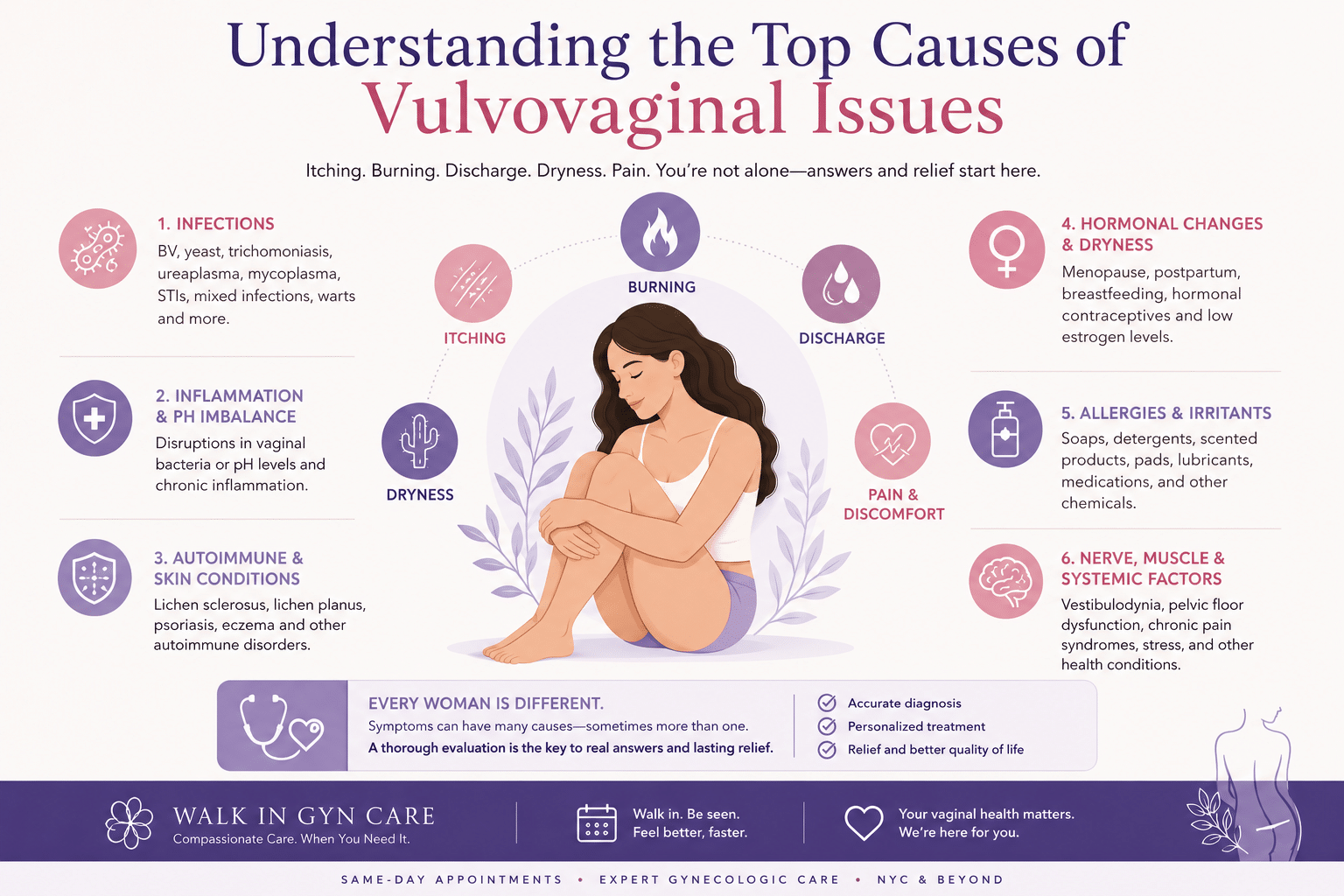
Top Causes of Vulvovaginal Symptoms: Understanding Itching, Burning, Discharge, Dryness and Pain
Women commonly experience vulvovaginal symptoms at some point in their lives. Symptoms such as itching, burning, unusual discharge, dryness, irritation, and painful intercourse can be frustrating, embarrassing, and sometimes alarming.
Many women assume that every vaginal symptom is caused by a yeast infection or bacterial vaginosis (BV). However, the truth is that vulvovaginal symptoms can result from a wide variety of causes, including infections, hormonal changes, skin conditions, allergies, autoimmune diseases, nerve disorders, and even systemic health conditions.
At Walk In GYN Care, we evaluate thousands of women each year with vulvovaginal complaints. Understanding the underlying cause is critical because treating the wrong condition can often worsen symptoms. Seeing care is easy- just walk in or schedule a virtual appointment to get care from board-certified providers today!!
Common Vulvovaginal Symptoms
The most common symptoms women seek care for include:
- Vaginal itching
- Vulvar itching
- Burning sensations
- Vaginal pain
- Pelvic discomfort
- Vaginal discharge
- Vaginal dryness
- Pain during sex
- Decreased lubrication
- General irritation
Let’s explore the most common causes.
1. Causes of Vaginal and Vulvar Itching
Itching is one of the most common gynecologic complaints and can arise from several different conditions.
Vaginal Infections
Infections are among the most common causes of itching, including:
- Yeast infections (Candida)
- Bacterial vaginosis (BV)
- Mixed infections
- Ureaplasma infections
- Mycoplasma infections
- Cytolytic vaginosis
- Genital warts
While infections are common, they are far from the only cause of itching.
Inflammation and pH Imbalance
The vagina maintains a delicate balance of bacteria, hormones, and acidity.
When this balance becomes disrupted, inflammation may develop, leading to:
- Itching
- Irritation
- Burning
- Sensitivity
Many women experience inflammation even when cultures are negative for infection.
Autoimmune and Skin Conditions
Several chronic skin disorders can affect the vulva and vagina, including:
- Lichen sclerosus
- Lichen planus
- Psoriasis
- Eczema
These conditions are often misdiagnosed as recurrent yeast infections and may require specialized treatment.
Vaginal Dryness
Dry tissues become fragile and irritated, often causing significant itching.
Dryness is especially common during:
- Menopause
- Breastfeeding
- Postpartum recovery
- Hormonal contraceptive use
Allergic Reactions
The vulva is highly sensitive and can react to:
- Soaps
- Detergents
- Scented products
- Pads and liners
- Lubricants
- Condoms
- Topical medications
In some cases, a generalized allergic reaction elsewhere in the body can also manifest as vulvar itching.
2. Causes of Vaginal Burning
Burning is another symptom frequently mistaken for infection.
Chronic or Recurrent Infections
Persistent infections can cause:
- Burning
- Stinging
- Rawness
- Pain
Certain viral infections such as herpes simplex virus (HSV) and shingles (zoster) may also cause severe burning sensations.
Hormonal Changes
Low estrogen levels can cause:
- Thinning of vaginal tissues
- Increased sensitivity
- Burning
- Pain with intercourse
This is particularly common in menopause and postpartum women.
Inflammation
Chronic inflammation can make tissues hypersensitive, resulting in ongoing burning even after an infection has resolved.
Chemical or Physical Injury
Common irritants include:
- Douching
- Harsh cleansers
- Tight clothing
- Excessive friction
- Sexual trauma
- Certain medications
Neuromuscular Conditions
Vestibulodynia and vulvodynia involve heightened nerve sensitivity and can cause chronic burning even when all testing appears normal.
Vaginal Warts
Human papillomavirus (HPV)-related lesions can sometimes produce irritation and burning.
Vulvar Cancer
Although uncommon, persistent burning that does not improve should always be evaluated by a gynecologist to rule out precancerous or cancerous conditions.
3. Causes of Vaginal Discharge
Not all vaginal discharge is abnormal.
However, changes in color, odor, quantity, or consistency may signal an underlying issue.
Infections
Common infectious causes include:
- Bacterial vaginosis
- Yeast infections
- Trichomoniasis
- Gonorrhea
- Ureaplasma
- Mycoplasma
- Mixed infections
Inflammatory Conditions
Certain inflammatory disorders can cause significant discharge, including:
Desquamative Inflammatory Vaginitis (DIV)
DIV is a chronic inflammatory condition that may cause:
- Yellow discharge
- Burning
- Pain
- Redness
Severe Vaginal Dryness
Paradoxically, dryness can sometimes trigger inflammatory discharge.
Pelvic Inflammatory Disease (PID)
PID is an infection involving the uterus, fallopian tubes, or ovaries and can lead to:
- Abnormal discharge
- Pelvic pain
- Fever
- Fertility complications
Foreign Bodies
Retained tampons, contraceptive devices, or other foreign objects may produce discharge and odor.
Chronic Irritation
Long-term irritation from:
- Douching
- Panty liners
- Thongs
- Chemicals
- Friction
can lead to abnormal discharge.
Gynecologic Malignancies
Persistent watery, bloody, or unusual discharge may occasionally be associated with:
- Cervical cancer
- Vaginal cancer
- Endometrial cancer
4. Causes of Vaginal Dryness
Many women associate dryness exclusively with menopause, but several factors can contribute.
Estrogen Deficiency
Low estrogen remains the most common cause.
Common situations include:
- Menopause
- Perimenopause
- Postpartum recovery
- Breastfeeding
- Certain hormonal contraceptives
Medication Side Effects
Some medications can reduce natural lubrication, including:
- Antihistamines
- Certain antidepressants
- Hormonal therapies
Autoimmune Disorders
Conditions affecting mucous membranes can contribute to severe dryness and discomfort.
Chronic Inflammation
Inflammation may impair tissue health and lubrication.
Repeated Chemical or Physical Injury
Frequent irritation can damage protective tissues and worsen dryness over time.
5. Causes of Generalized Vulvovaginal Discomfort
Sometimes symptoms do not fit neatly into one diagnosis.
Women may experience:
- Pressure
- Irritation
- Rawness
- Sensitivity
- General discomfort
These symptoms can result from any of the causes already discussed.
In some cases, multiple systems contribute simultaneously, including:
- Gynecologic conditions
- Urinary tract disorders
- Gastrointestinal conditions
- Dermatologic diseases
- Hormonal imbalances
A comprehensive evaluation is often necessary to identify the root cause.
Don’t Ignore Emotional Health
Chronic vulvovaginal symptoms can significantly affect:
- Mood
- Sleep
- Relationships
- Sexual health
- Quality of life
Addressing both physical and emotional health is often an important part of successful treatment.
6. Causes of Sexual Pain and Intimacy Concerns
Sexual symptoms frequently accompany vulvovaginal disorders.
Common concerns include:
- Pain during intercourse
- Lack of lubrication
- Reduced sexual desire
- Difficulty achieving orgasm
Potential contributors include:
- Vaginal dryness
- Hormonal imbalance
- Chronic inflammation
- Pelvic floor dysfunction
- Neuromuscular disorders
- Relationship factors
- Emotional stress
These symptoms deserve the same level of medical attention as any other health concern.
When Should You See a Gynecologist?
You should seek evaluation if you experience:
- Persistent itching
- Burning lasting more than a few days
- Recurrent infections
- Pain during intercourse
- Abnormal discharge
- Vaginal bleeding after menopause
- New vulvar lesions or skin changes
- Symptoms that keep returning despite treatment
Early diagnosis often prevents complications and can significantly improve quality of life.
The Bottom Line
Not every vulvovaginal symptom is caused by a yeast infection.
Infections, hormonal changes, autoimmune conditions, skin disorders, allergies, inflammation, nerve disorders, and even systemic health conditions can all contribute to itching, burning, discharge, dryness, and pain.
The key to effective treatment is identifying the true underlying cause rather than repeatedly treating symptoms without a diagnosis.
At Walk In GYN Care, our team provides same-day evaluation, testing, ultrasound services, and personalized treatment plans for women experiencing vulvovaginal symptoms. Whether your symptoms are new or have been recurring for years, our goal is to help you find answers and relief quickly.
Frequently Asked Questions About Vulvovaginal Symptoms
Why am I itching down there but don’t have a yeast infection?
Many women assume that itching automatically means a yeast infection, but that is often not the case. Vaginal and vulvar itching can also be caused by:
- Bacterial vaginosis (BV)
- Hormonal changes and vaginal dryness
- Allergic reactions to soaps, detergents, pads, or lubricants
- Skin conditions such as eczema or psoriasis
- Autoimmune disorders like lichen sclerosus and lichen planus
- pH imbalances and chronic inflammation
- Nerve-related conditions affecting the vulva
If symptoms persist despite treatment for yeast infections, a comprehensive gynecologic evaluation may help identify the true underlying cause.
What causes vaginal burning without infection?
Burning can occur even when all infection testing is negative. Common non-infectious causes include:
- Vaginal dryness related to menopause or postpartum changes
- Hormonal imbalances
- Chronic inflammation
- Allergic reactions
- Chemical irritation from hygiene products
- Pelvic floor dysfunction
- Vestibulodynia or vulvodynia (nerve-related pain conditions)
- Skin disorders affecting the vulva
Persistent burning should always be evaluated to rule out less common but important conditions.
Can menopause cause vaginal itching?
Yes. Menopause is one of the most common causes of vaginal and vulvar itching.
As estrogen levels decline, vaginal tissues become:
- Thinner
- Drier
- More fragile
- More susceptible to irritation and inflammation
This condition, often called Genitourinary Syndrome of Menopause (GSM), can also cause burning, painful intercourse, recurrent urinary symptoms, and vaginal discomfort.
Why do I keep getting vaginal discharge?
Recurring discharge may be caused by:
- Recurrent bacterial vaginosis (BV)
- Chronic yeast infections
- Trichomoniasis
- Ureaplasma or Mycoplasma infections
- Pelvic inflammatory disease (PID)
- Chronic inflammation
- Desquamative Inflammatory Vaginitis (DIV)
- Retained foreign bodies such as tampons
- Hormonal changes
Not all discharge is abnormal. The color, consistency, odor, and associated symptoms help determine whether treatment is needed.
What autoimmune diseases affect the vulva?
Several autoimmune and inflammatory conditions can affect vulvar skin and vaginal tissues, including:
- Lichen sclerosus
- Lichen planus
- Psoriasis
- Sjögren’s syndrome
- Lupus
- Other connective tissue disorders
These conditions may cause:
- Severe itching
- Burning
- Skin discoloration
- Tissue thinning
- Pain during intercourse
- Scarring if left untreated
Early diagnosis is important to prevent long-term complications.
When should I worry about vaginal burning?
You should schedule an evaluation if vaginal burning:
- Lasts longer than a few days
- Repeatedly returns
- Interferes with daily activities
- Causes pain during sex
- Occurs with sores, lesions, or skin changes
- Is associated with abnormal bleeding
- Does not improve with standard treatments
Persistent symptoms deserve medical attention, especially if previous treatments have not helped.
Can allergies cause vulvar irritation?
Absolutely.
The vulva is one of the most sensitive areas of the body and may react to:
- Scented soaps
- Bubble baths
- Laundry detergents
- Fabric softeners
- Pads and panty liners
- Condoms
- Lubricants
- Topical medications
Even products marketed as “gentle” or “natural” can sometimes trigger irritation in sensitive individuals.
Why does sex hurt even when I don’t have an infection?
Pain during sex is not always caused by infection. Other common causes include:
- Vaginal dryness
- Menopause or low estrogen levels
- Pelvic floor muscle dysfunction
- Endometriosis
- Vulvodynia or vestibulodynia
- Lichen sclerosus or lichen planus
- Chronic inflammation
- Prior childbirth trauma
- Emotional stress and anxiety
Painful intercourse is never something you should simply “live with.” Identifying the underlying cause can often lead to significant improvement and a better quality of life.
Frequently Asked Question Summary
Q: Why am I itching down there but don’t have a yeast infection?
A: Hormonal changes, allergies, skin conditions, autoimmune diseases, and inflammation are common non-yeast causes of vulvar itching.
Q: What causes vaginal burning without infection?
A: Dryness, hormonal imbalance, inflammation, allergies, and nerve-related conditions are common causes.
Q: Can menopause cause vaginal itching?
A: Yes. Falling estrogen levels can lead to vaginal dryness, irritation, itching, and painful intercourse.
Q: Why do I keep getting vaginal discharge?
A: Recurrent infections, inflammation, hormonal changes, and pelvic conditions may all contribute.
Q: What autoimmune diseases affect the vulva?
A: Lichen sclerosus, lichen planus, psoriasis, Sjögren’s syndrome, and lupus can affect vulvar tissues.
Q: When should I worry about vaginal burning?
A: If symptoms persist, recur frequently, worsen, or are associated with bleeding, sores, or pain.
Q: Can allergies cause vulvar irritation?
A: Yes. Soaps, detergents, pads, lubricants, and other products commonly trigger irritation.
Q: Why does sex hurt even when I don’t have an infection?
A: Vaginal dryness, pelvic floor dysfunction, hormonal changes, endometriosis, and vulvar pain disorders are common causes.
At Walk In GYN Care, we evaluate thousands of women each year with vulvovaginal complaints. Understanding the underlying cause is critical because treating the wrong condition can often worsen symptoms. Seeing care is easy- just walk in or schedule a virtual appointment to get care from board-certified providers today!!
Or you can call or text us at 917-410-6905
Be safe, be strong, be prepared
Dr. Adeeti Gupta